01
The conditions life requires from water
- A liquid range that spans biologically relevant temperatures
- Ability to dissolve ions and polar molecules while excluding nonpolar ones
- Sufficient availability and stability over geological time
01
The conditions life requires from water
- A liquid range that spans biologically relevant temperatures
- Ability to dissolve ions and polar molecules while excluding nonpolar ones
- Sufficient availability and stability over geological time
02
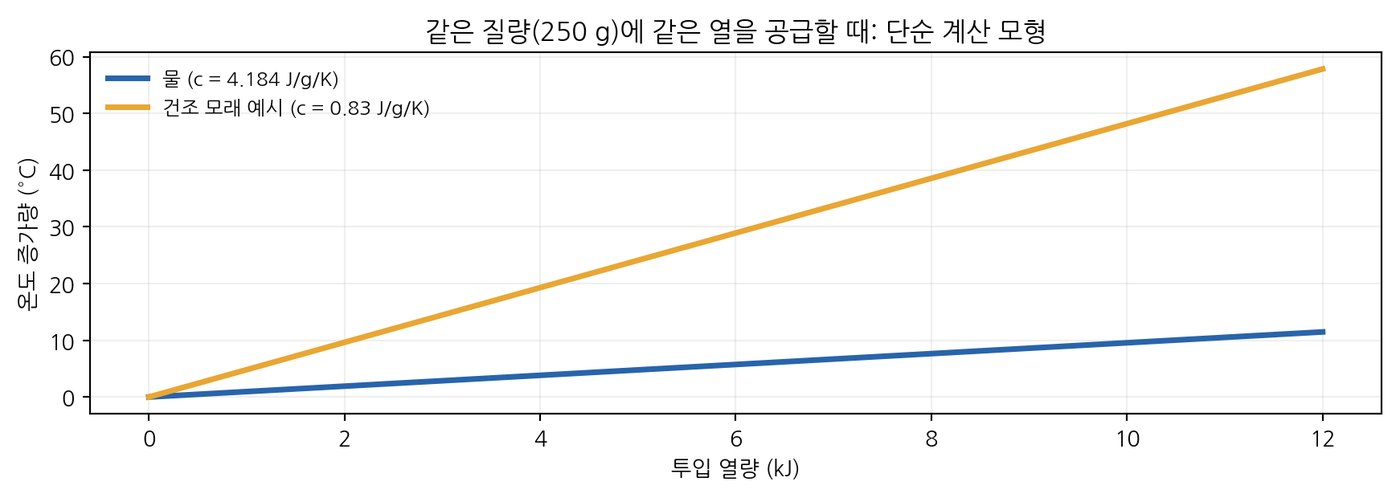
High heat capacity and heat of vaporisation buffer organisms and environments
- Water absorbs large amounts of heat with a small temperature change
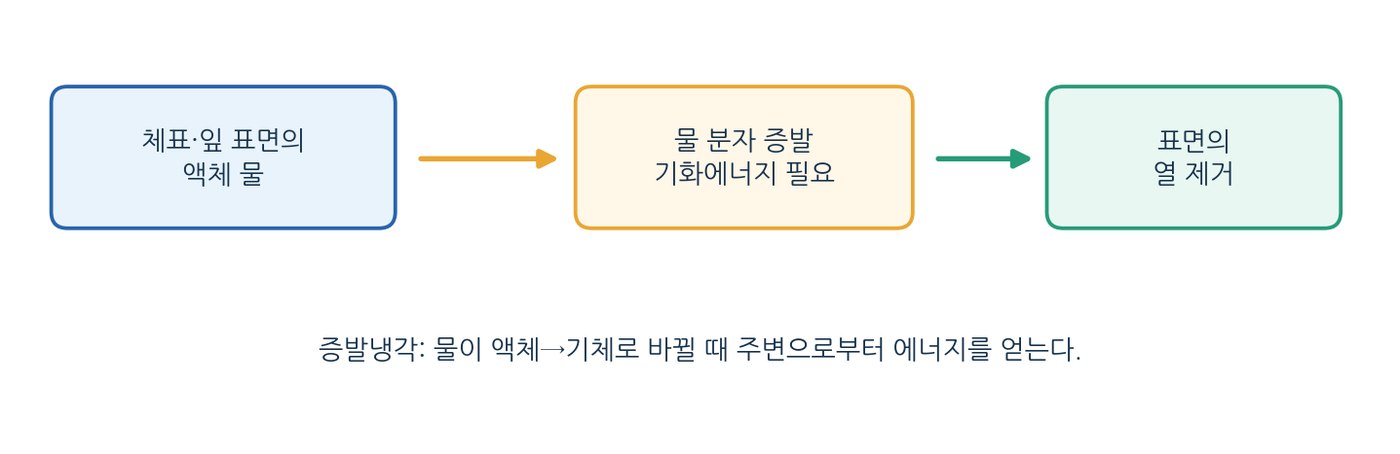
- Evaporative cooling removes heat efficiently through sweating and transpiration
- Large water bodies moderate regional climate
02
High heat capacity and heat of vaporisation buffer organisms and environments
- Water absorbs large amounts of heat with a small temperature change
- Evaporative cooling removes heat efficiently through sweating and transpiration
- Large water bodies moderate regional climate
03
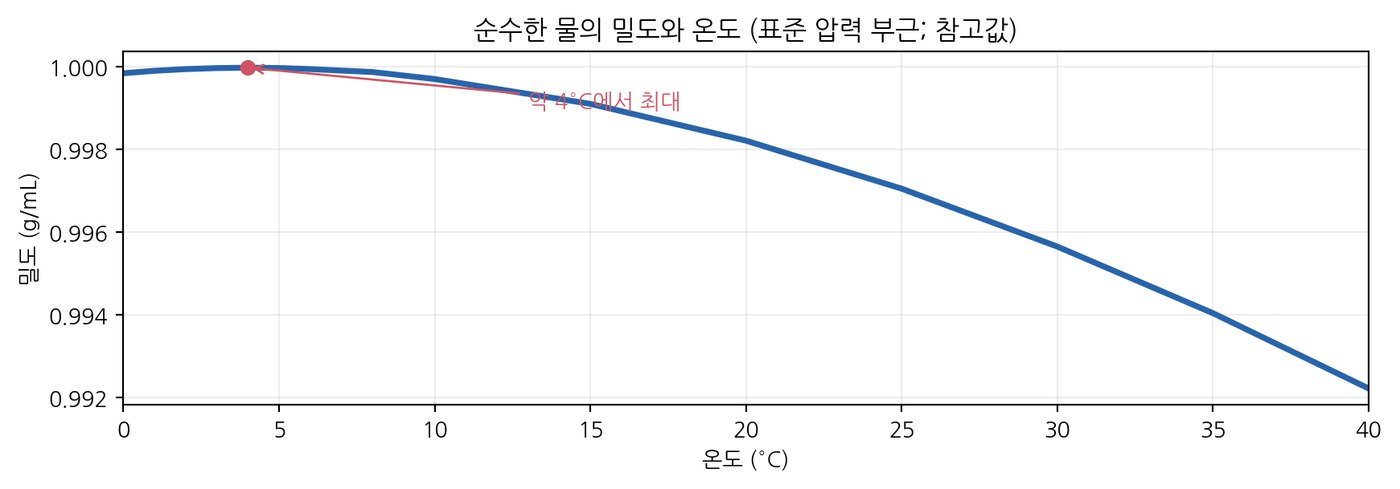
The density anomaly protects aquatic life in winter
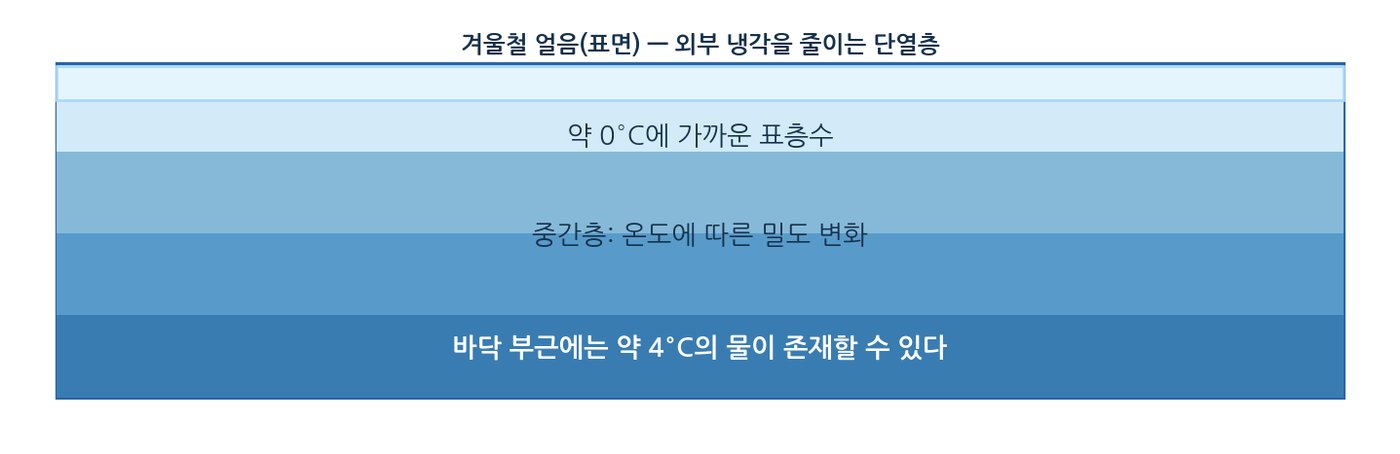
- Ice is less dense than liquid water and floats
- The 4 °C maximum density means the bottom of a lake stays liquid
- Stratification slows heat loss and allows survival below the ice
04
Cohesion and adhesion support long-distance transport
- Hydrogen bonds create high surface tension and tensile strength
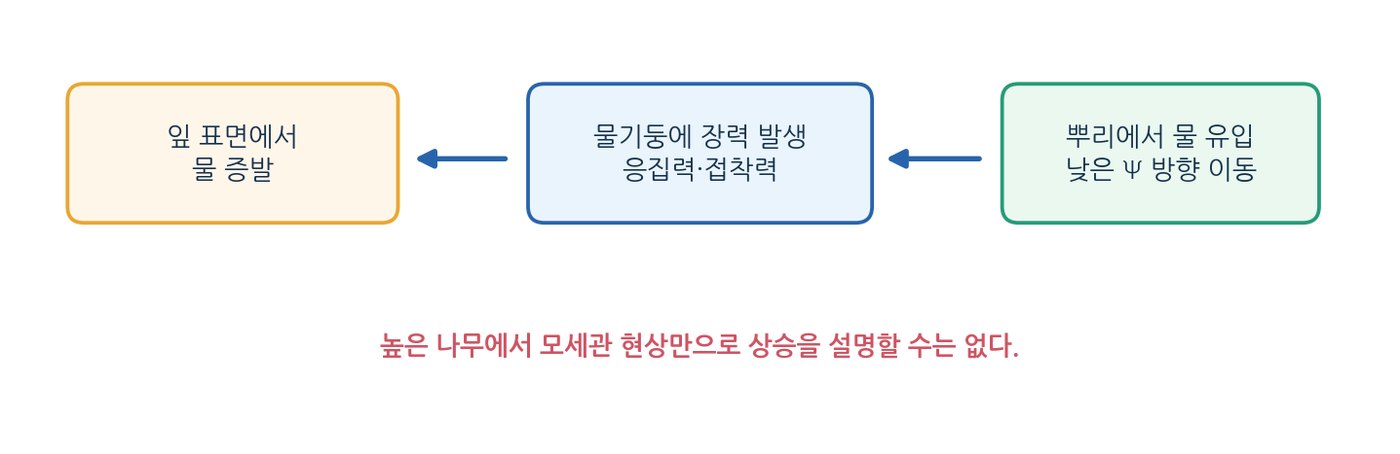
- Cohesion allows water columns to be pulled through xylem under tension
- Capillary action combines adhesion to walls with cohesion within the column
05
Cells balance water across membranes
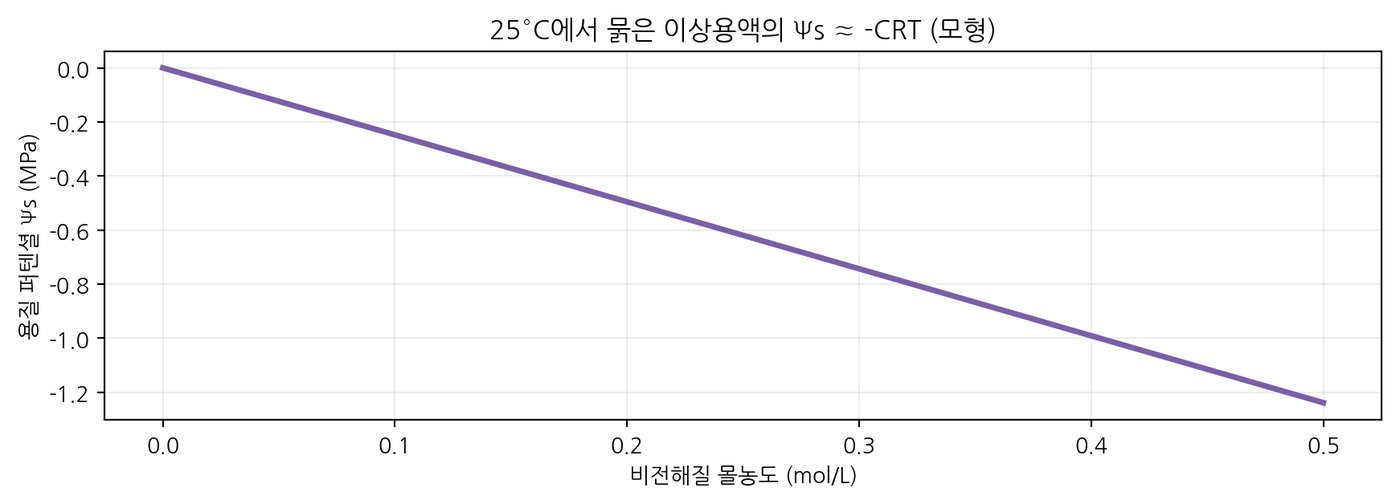
- Osmosis moves water toward the higher solute concentration
- Animal cells regulate volume by pumping ions; plant cells rely on the cell wall and turgor
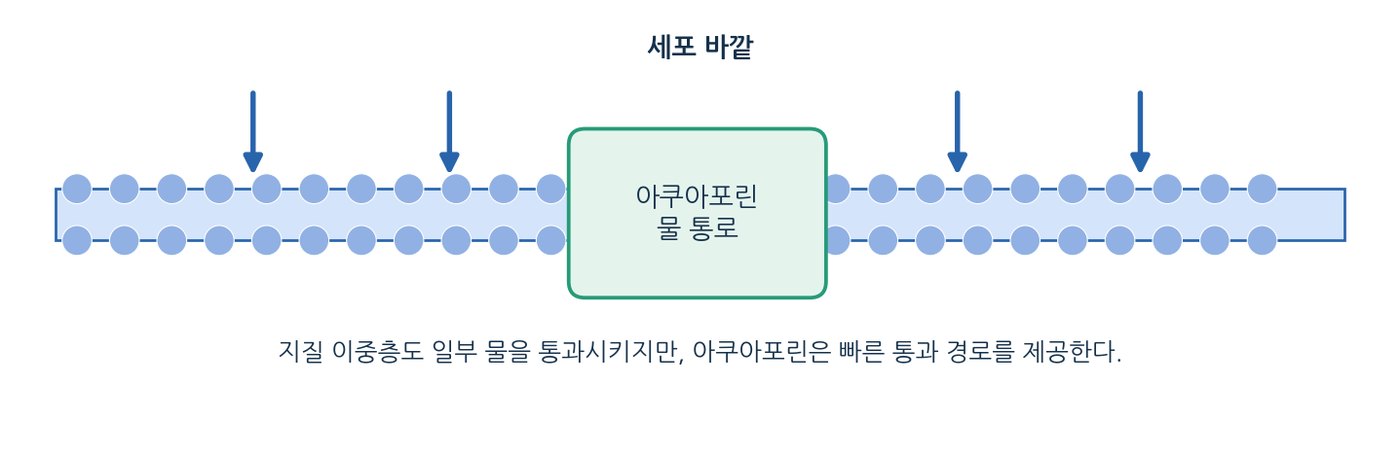
- Aquaporins increase water permeability without passing ions
06
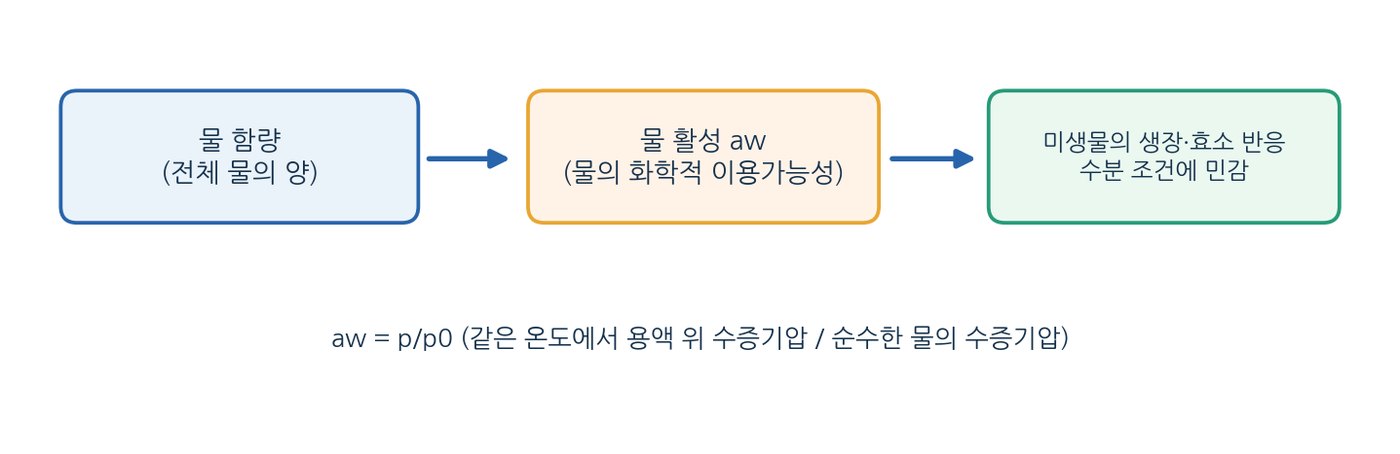
Water availability is measured as water activity
- Water activity reflects the fraction of water available for reactions
- High solute concentrations lower water activity and limit microbial growth
- Preservation by salting or sugaring works through reduced water activity
07
Temperature and dissolved oxygen constrain aquatic life
- Warm water holds less oxygen than cold water
- Thermal stratification can isolate a hypoxic layer
- Metabolic demand rises with temperature while supply falls
08
Salinity defines both the advantages and limits of water
- Osmotic stress requires osmoregulation in marine and freshwater organisms
- Halophiles accumulate compatible solutes to balance external salt
- Salinity shapes species distribution in estuaries and coastal waters
09
Is liquid water a sufficient condition for life?
- Liquid water appears necessary for known life, but necessity is not sufficiency
- Energy sources, essential elements and stable conditions are also required
- The question motivates the search for habitable environments beyond Earth
10
Unit synthesis: from molecules to ecosystems
- Molecular properties scale up to cellular, organismal and ecological consequences
- The same hydrogen bond explains protein folding, transpiration and lake stratification
- Reading a property at one level and predicting another is the recurring method of biochemistry
References
| Property | Molecular basis | Biological meaning | Limit or caution |
|---|---|---|---|
| High specific heat | Energy exchange in the hydrogen-bond network | Damping of temperature change | Does not prevent extreme heat input |
| High heat of vaporisation | Energy needed for the liquid–gas transition | Sweating and transpirational cooling | Involves water loss |
| Cohesion and adhesion | Intermolecular forces and surface interaction | Transport and surface tension | Tall trees need transpirational pull |
| Low density of the solid | Open crystal structure of ice | Buoyancy of ice; surface freezing | Salinity and mixing alter freezing |
| Polarity and solvent behaviour | Hydration and ion dispersal | Transport of reactants, ions and metabolites | Excess water causes osmotic stress |
| Quantity | Representative value | Condition |
|---|---|---|
| Specific heat of water | ≈4.18 J/(g·K) | Liquid water near room temperature |
| Latent heat of vaporisation | ≈2.4 kJ/g | Approximate value near room temperature |
| Energy example | 192 kJ | Ideal case: 80 g of water fully evaporated |
| Term | Meaning | Typical sign |
|---|---|---|
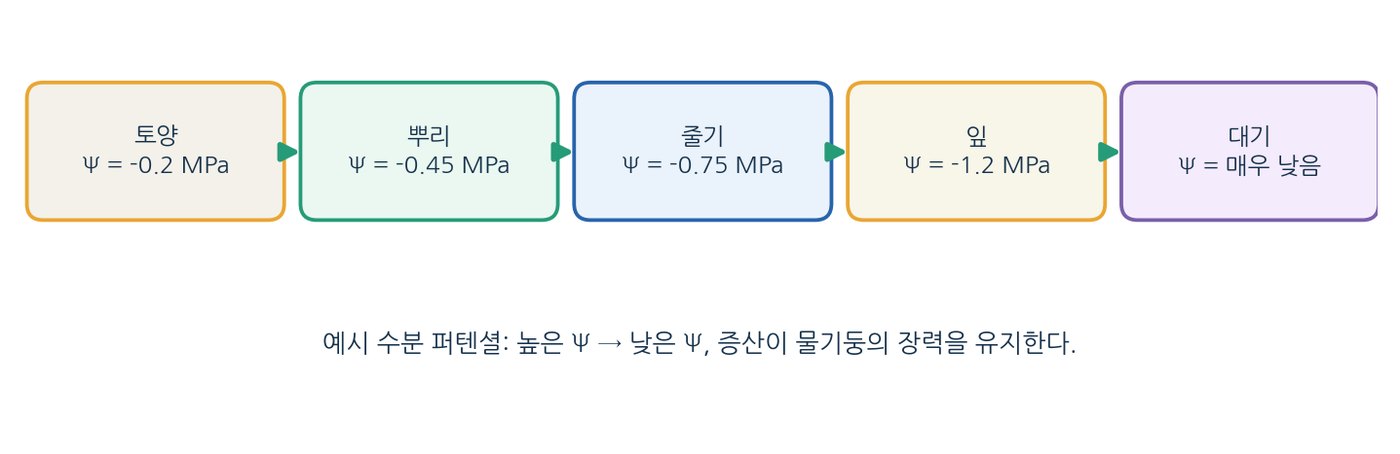
| Ψs | Solute potential: lowered by the presence of solute | Usually zero or negative |
| Ψp | Pressure potential: turgor positive, tension may be negative | Positive or negative |
| Ψg | Gravitational potential with height | Depends on the reference point |
| Ψm | Interaction of water with walls and soil particles | Usually zero or negative |
| Term | Meaning | Caution in class |
|---|---|---|
| Water content | Mass fraction of water in a material | Different from water activity |
| Water activity aw | State variable defined from the vapour-pressure ratio | Range 0–1; depends on temperature |
| Osmotic stress | Impaired function from differences in water movement | Consider solute permeability |
| Compatible solute | Accumulated solute that preserves protein function | Not every species uses the same strategy |
| Temperature | Representative saturated DO (mg/L) |
|---|---|
| 0 °C | 14.6 |
| 5 °C | 12.8 |
| 10 °C | 11.3 |
| 15 °C | 10.1 |
| 20 °C | 9.1 |
| 25 °C | 8.3 |
| 30 °C | 7.6 |
| Phenomenon | Core concept | Linked section |
|---|---|---|
| Body and environmental temperature | Specific heat, heat of vaporisation, heat balance | 2.1 Hydrogen bonding |
| Water movement across cells | Osmosis, water potential, aquaporins | 2.1 Colligative properties |
| Solute and enzyme function | Hydration, pH, water activity | 2.2–2.3 Acid–base and buffering |
| Water as a participant in reactions | Hydrolysis, water oxidation | 2.4 Water as a reactant |
| Maintenance of aquatic ecosystems | Density, dissolved oxygen, stratification, salinity | 2.5 Fitness of the aqueous environment |