01
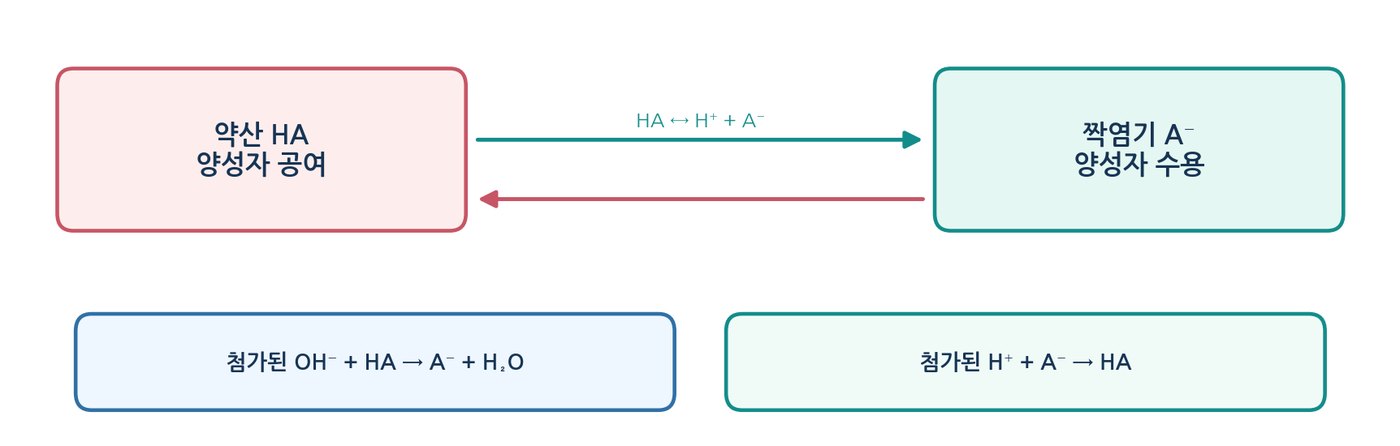
A buffer is a mixture of a weak acid and its conjugate base
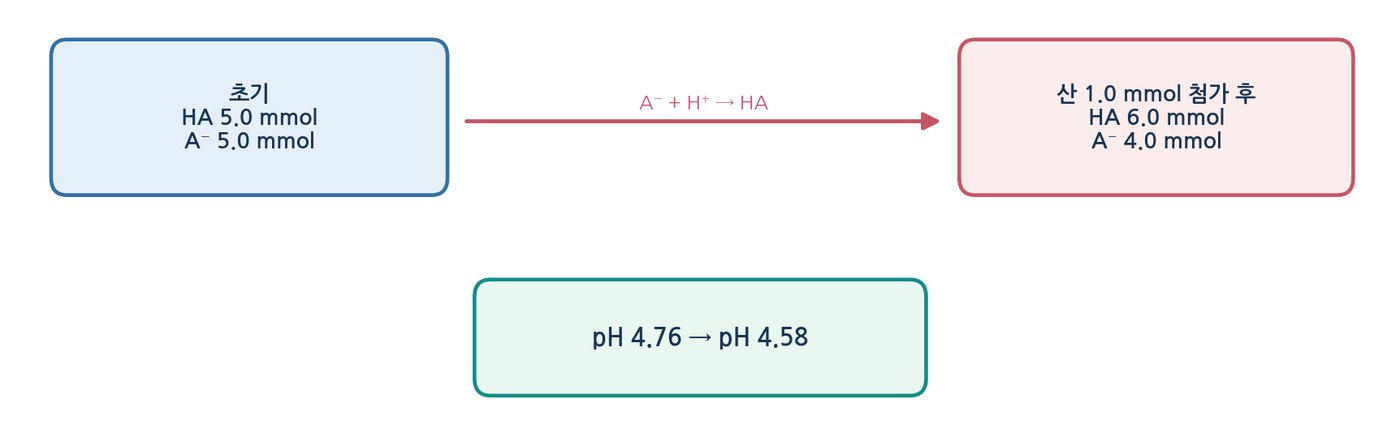
- Added H⁺ is absorbed by the conjugate base; added OH⁻ is neutralised by the weak acid
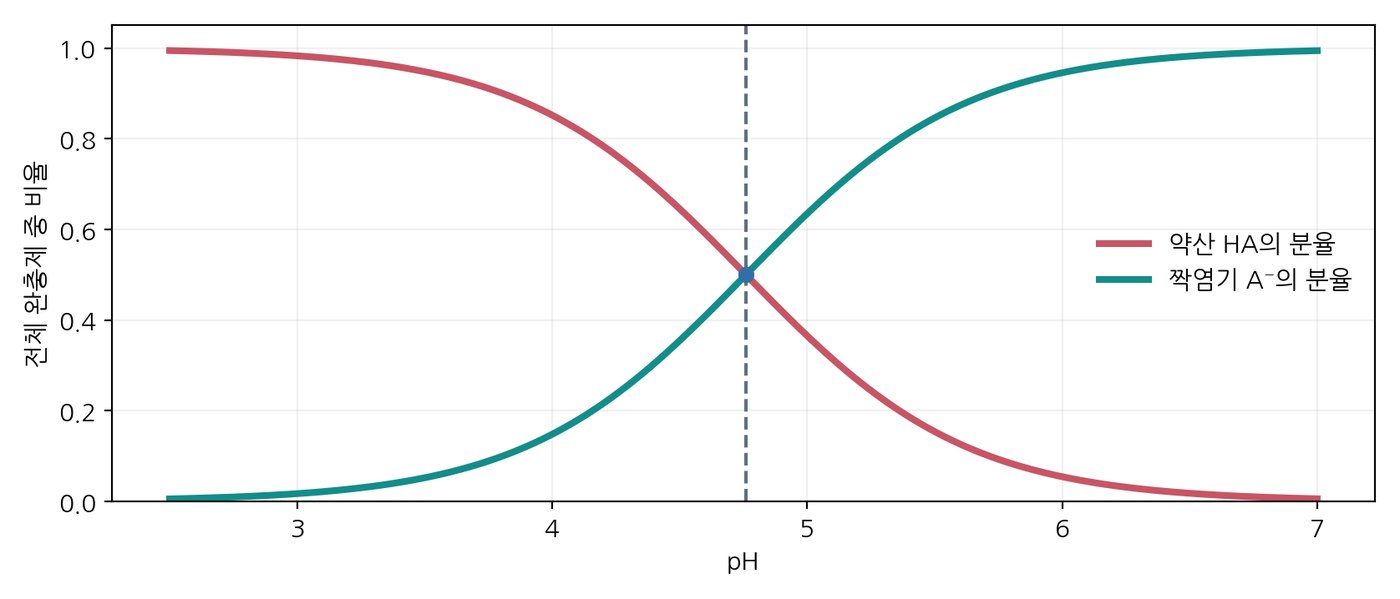
- The buffer pair must be present in comparable amounts to work well
- A buffer does not fix pH; it slows the change
02
Henderson–Hasselbalch relates pH, pKa and buffer concentration
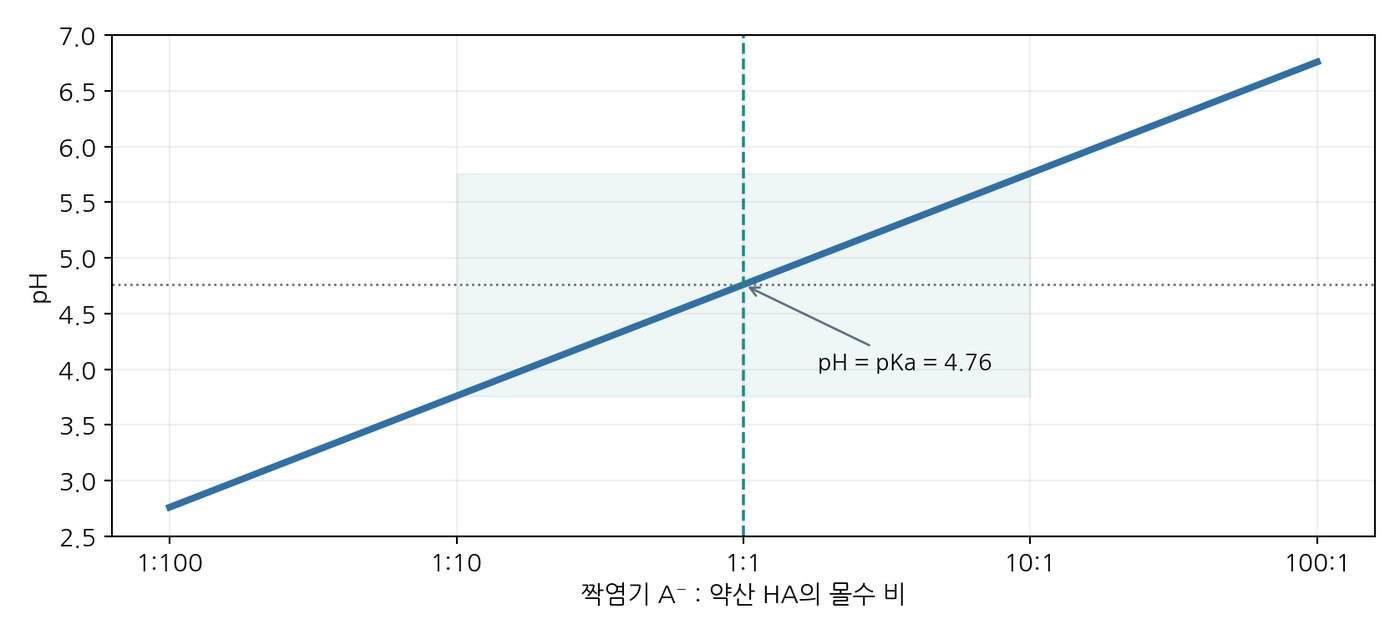
- pH = pKa + log([A⁻]/[HA])
- When the ratio is 1, pH equals pKa; each tenfold change in ratio shifts pH by one unit
- The relation assumes ideal behaviour and activities approximated by concentrations
02
Henderson–Hasselbalch relates pH, pKa and buffer concentration
- pH = pKa + log([A⁻]/[HA])
- When the ratio is 1, pH equals pKa; each tenfold change in ratio shifts pH by one unit
- The relation assumes ideal behaviour and activities approximated by concentrations
03
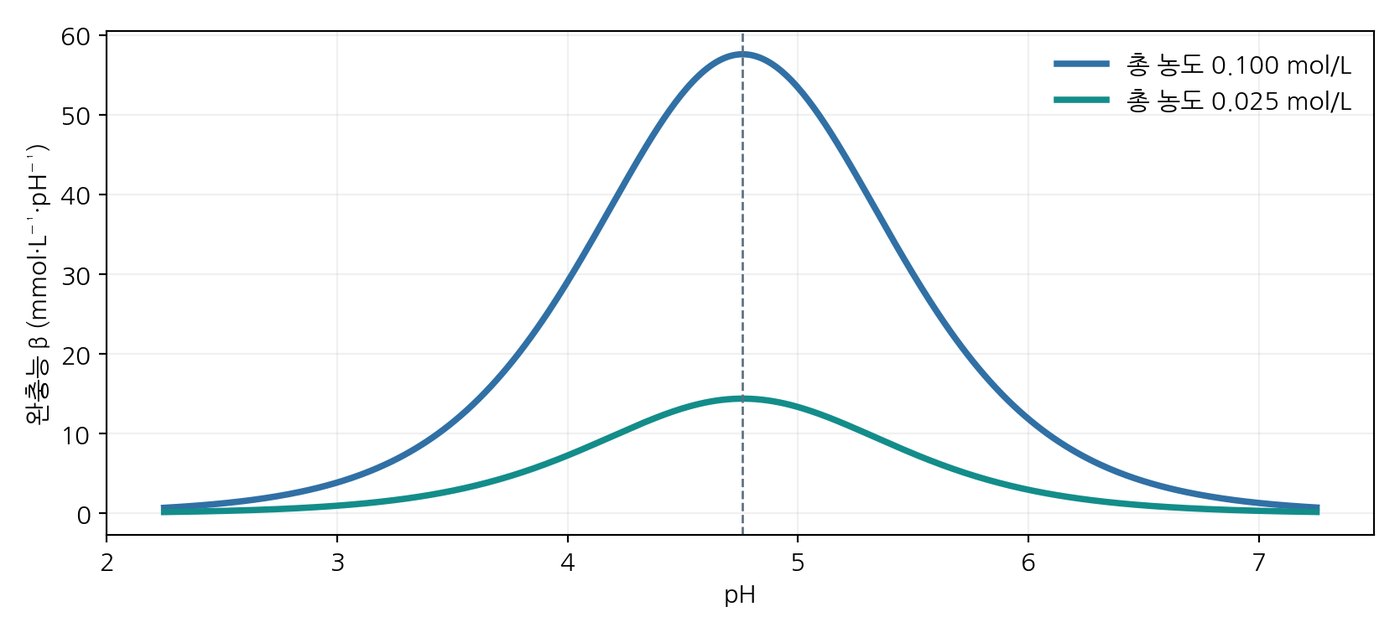
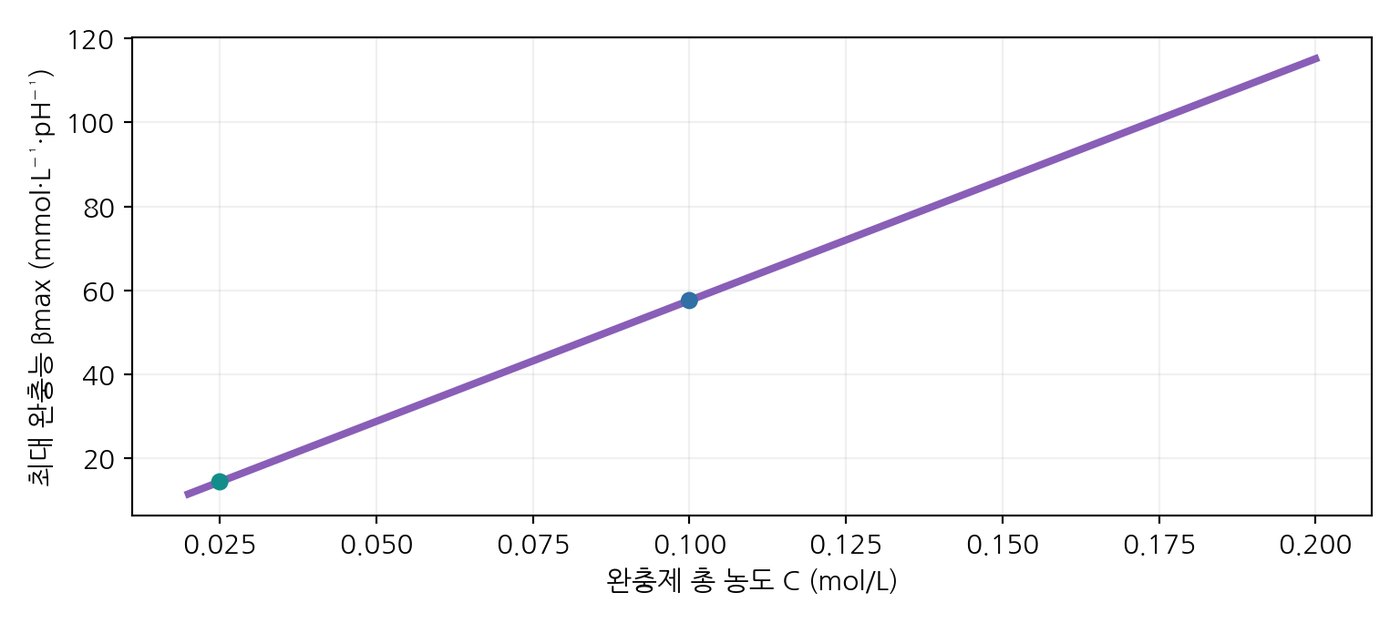
Buffer capacity depends on concentration and composition
- Capacity rises with total buffer concentration
- Capacity is greatest within about one pH unit of the pKa
- Outside that window the buffer is a poor choice regardless of concentration
04
Weak acids and bases buffer cells and tissues
- Phosphate buffer operates inside cells near pH 7.2
- The bicarbonate system with CO₂ handles the volatile acid load of respiration
- Proteins contribute buffering through histidine and terminal groups
05
Untreated diabetes can cause life-threatening acidosis
- Ketone bodies accumulate when insulin is insufficient
- Bicarbonate is consumed as the acids are neutralised
- When compensation fails, blood pH falls and the condition becomes an emergency
06
[Separate note 2-1] Becoming your own experimental animal
- Early investigators tested acid–base balance on themselves
- The observations established the link between ventilation and blood pH
- Modern work would require ethical approval and far safer methods
References
| Adding strong acid H⁺ | Adding strong base OH⁻ |
|---|---|
| A⁻ + H⁺ → HA | HA + OH⁻ → A⁻ + H₂O |
| A⁻ decreases and HA increases | HA decreases and A⁻ increases |
| A buffer low in A⁻ is vulnerable to acid | A buffer low in HA is vulnerable to base |
| [A⁻]/[HA] | pH − pKa | Interpretation |
|---|---|---|
| 1:10 | −1.00 | Weak acid predominates; poor defence against acid load |
| 1:1 | 0.00 | Balanced buffering in both directions |
| 10:1 | +1.00 | Conjugate base predominates; poor defence against base load |
| 100:1 | +2.00 | Outside the usual effective buffering range |
| Component | Main role | Teaching point |
|---|---|---|
| Bicarbonate / CO₂ | Acid–base control of blood and extracellular fluid | The lung removes CO₂, so the system behaves as an open system |
| Phosphate | Buffering inside cells and in the renal tubule | The effective pKa depends on conditions |
| Haemoglobin and protein | Bind and release H⁺, damping pH change | Surface groups have a range of pKa values |
| Respiratory system | Adjusts pCO₂ | Compensatory route for metabolic disturbance |
| Kidney | H⁺ excretion and HCO₃⁻ regulation | Essential for sustained excretion of nonvolatile acid |
| Domain | Educational reference criterion | Caution in interpretation |
|---|---|---|
| Diabetes and glucose | Known diabetes or glucose ≥ 200 mg/dL | DKA can occur with normal or low glucose |
| Ketone elevation | β-hydroxybutyrate ≥ 3.0 mmol/L and others | Urine ketones do not quantify the main ketone bodies |
| Metabolic acidosis | pH < 7.3 or HCO₃⁻ < 18 mmol/L | Timing of sampling matters; other conditions must be excluded |
| Term | Core meaning |
|---|---|
| Ketosis | Raised ketone bodies; not necessarily accompanied by acidosis |
| Ketoacidosis | Metabolic acidosis associated with increased ketone acids |
| Acidemia | Blood pH below the normal range |
| Compensatory hyperventilation | CO₂ excretion that partly raises pH in metabolic acidosis |
| Bicarbonate consumption | Fall in HCO₃⁻ as an acid load is taken up |