BIOCHEM 2027 Specialised Subject · 1-5
2027 · High School Specialised Subject · Biochemistry

1-5 The Evolutionary Foundations

From chemical evolution to comparative genomics

Mutation and selection, chemical evolution and the RNA world, the dating of early life, inorganic energy sources, the endosymbiotic origin of eukaryotes, molecular phylogeny, functional genomics and comparative genomics.

9 SECTIONSOutline notesPrint-readyEnglish edition
01

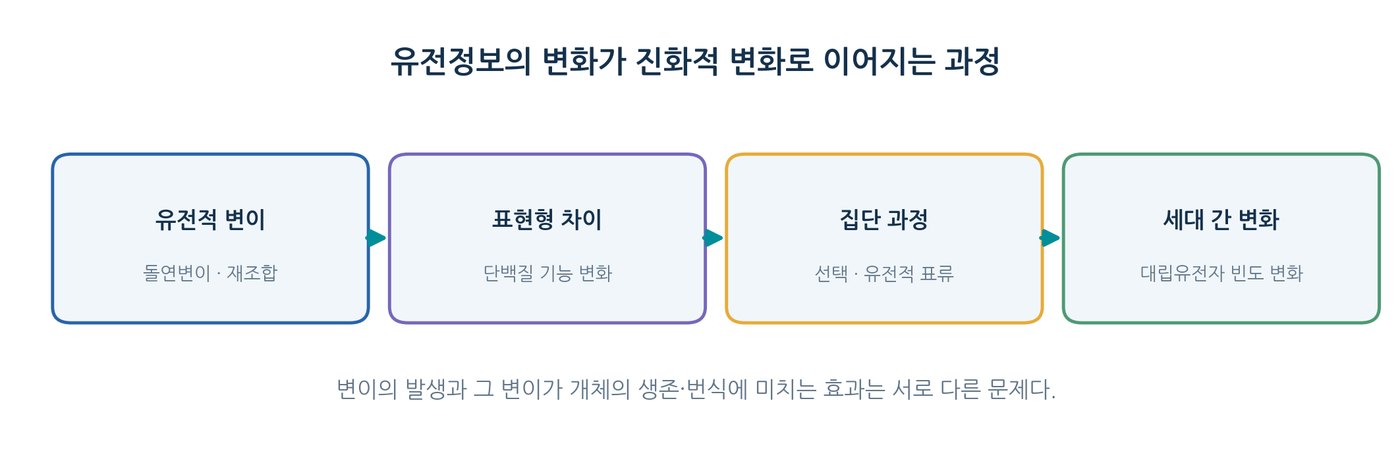
Evolution occurs through changes in genetic instructions

Mutation, recombination and gene transfer create variation; selection and drift change its frequency.

  • Evolution — change in the genetic composition of a population across generations
  • Sources of variation — substitutions, insertions, deletions, copy-number and chromosomal changes; meiotic recombination; horizontal gene transfer in bacteria and archaea
  • Not every change alters protein — synonymous substitutions, regulatory-region changes, and amino-acid changes with little functional effect
  • Natural selection — requires heritable trait variation linked to differences in reproductive success
  • Genetic drift — random change in allele frequency in finite populations, independent of fitness
  • Selection model — p′ = p(1+s)/(1+ps); with p = 0.20 and s = 0.10, p′ ≈ 0.216, a gain of about 0.016 per generation
  • Caution — mutations do not arise in anticipation of future benefit
p′ = p(1 + s) / (1 + ps)
02

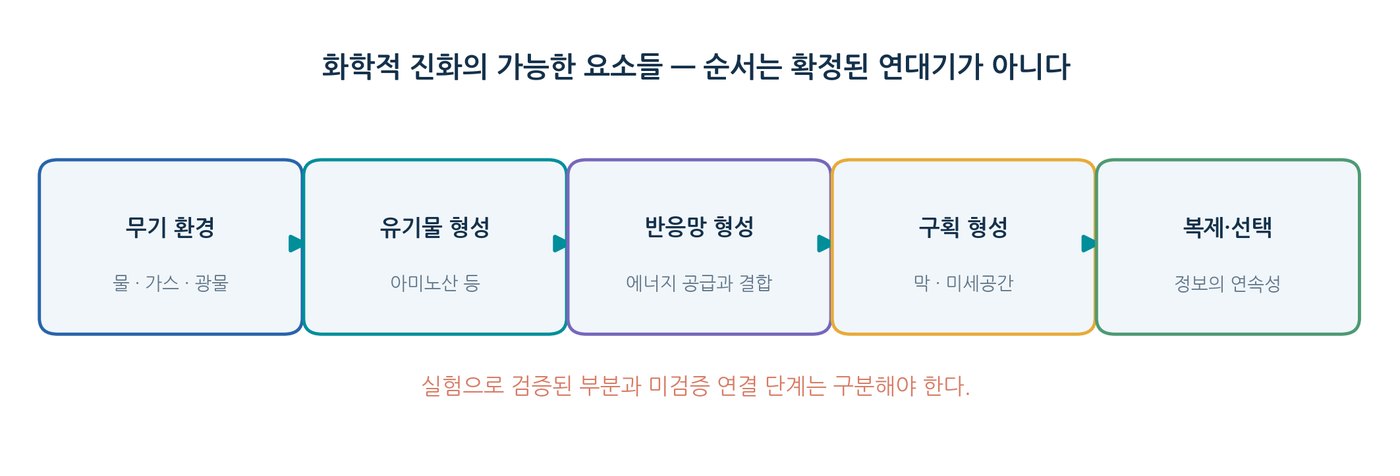
Biomolecules first arose by chemical evolution

Experiments show that organic molecules can form abiotically; they do not show how replication began.

  • Chemical evolution — formation of organic molecules and increasingly complex reaction systems without life, some of which may have acquired replication and selection
  • Miller–Urey (1953) — circulating water and simple gases with electrical discharge produced amino acids and other organics
  • What it proves — organic synthesis is possible under abiotic conditions
  • What it does not prove — the exact composition of the early atmosphere, or that the same path occurred on early Earth
  • Compartments — amphiphilic molecules form micelles and vesicles that concentrate reactants and separate inside from outside
  • But — a membrane alone does not create heredity or metabolism; replication, energy supply, growth and division must be coupled
03

RNA and its precursors may have been the first genes and catalysts

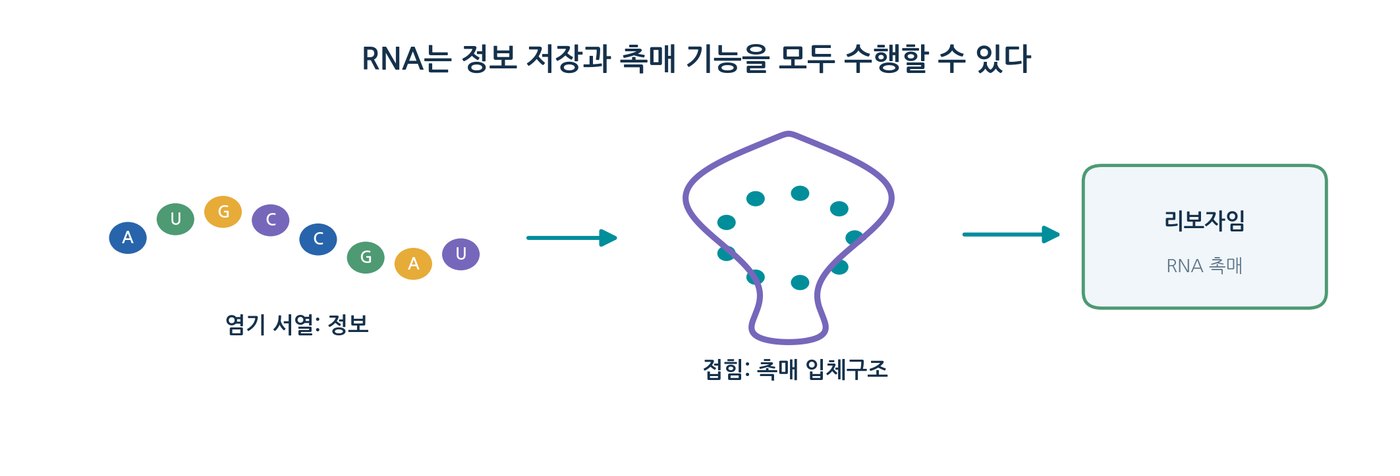
The RNA world hypothesis rests on one molecule doing two jobs: storing information and catalysing reactions.

  • Division of labour today — DNA stores, proteins catalyse, RNA transmits and regulates
  • Hypothesis — at some stage RNA, or a similar polymer, both stored information and catalysed replication chemistry
  • Ribozymes — Cech’s self-splicing RNA and Altman’s RNase P showed that RNA can catalyse; Nobel Prize in Chemistry, 1989
  • Ribosome — the peptidyl transferase centre is ribosomal RNA, a surviving RNA catalyst
  • Unresolved problems — sufficient activated nucleotides, stable long chains, control of copying errors, resistance to hydrolysis, and coupling to membranes and energy metabolism
  • Open alternatives — earlier polymers, short peptides or mineral catalysts may have preceded RNA
04

Biological evolution began more than 3.5 billion years ago

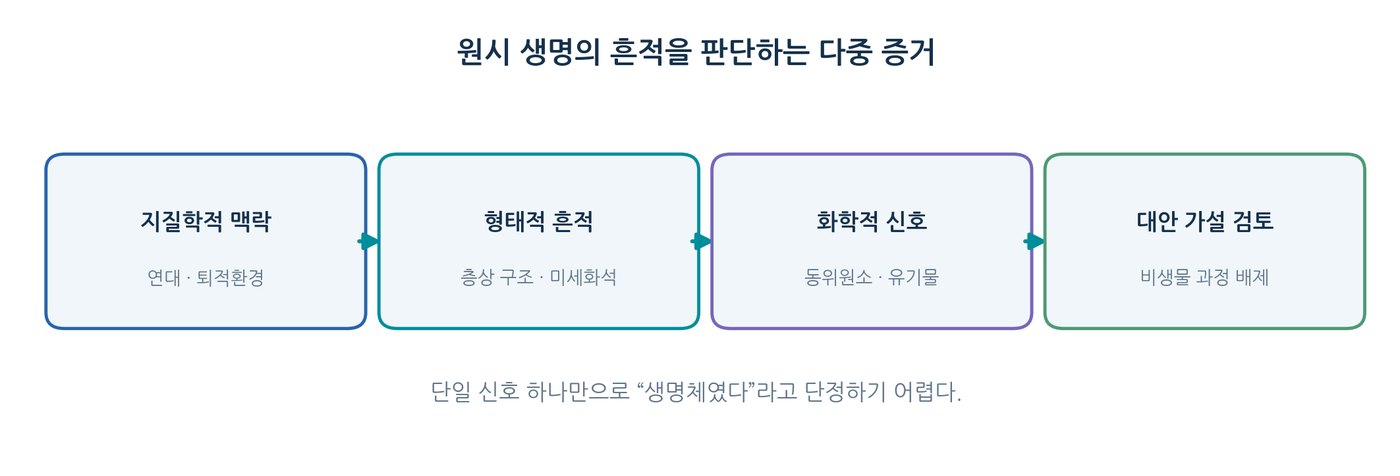
Fossils and geochemical signals date early life; molecular clocks and LUCA answer a different question.

  • Earth — formed about 4.54 billion years ago
  • Strong evidence — stromatolites and microbial traces around 3.5 billion years ago
  • Older claims — reports near 3.7 billion years remain debated because abiotic structures and alteration must be excluded
  • Converging evidence — stromatolite layering, microfossil morphology, carbon isotope fractionation, organic composition and geological context
  • Molecular clock — estimates divergence times from sequence differences, evolutionary rate and fossil calibration; rates vary and horizontal transfer complicates inference
  • LUCA — the last universal common ancestor, not the first cell; a 2024 phylogenomic study estimated about 4.2 billion years ago (range ≈ 4.09–4.33), one model rather than a settled date
  • Textbook statement — life was present at least 3.5 billion years ago
05

The first cells probably used inorganic fuels

Chemolithotrophy and chemiosmosis offer plausible energy strategies for early life.

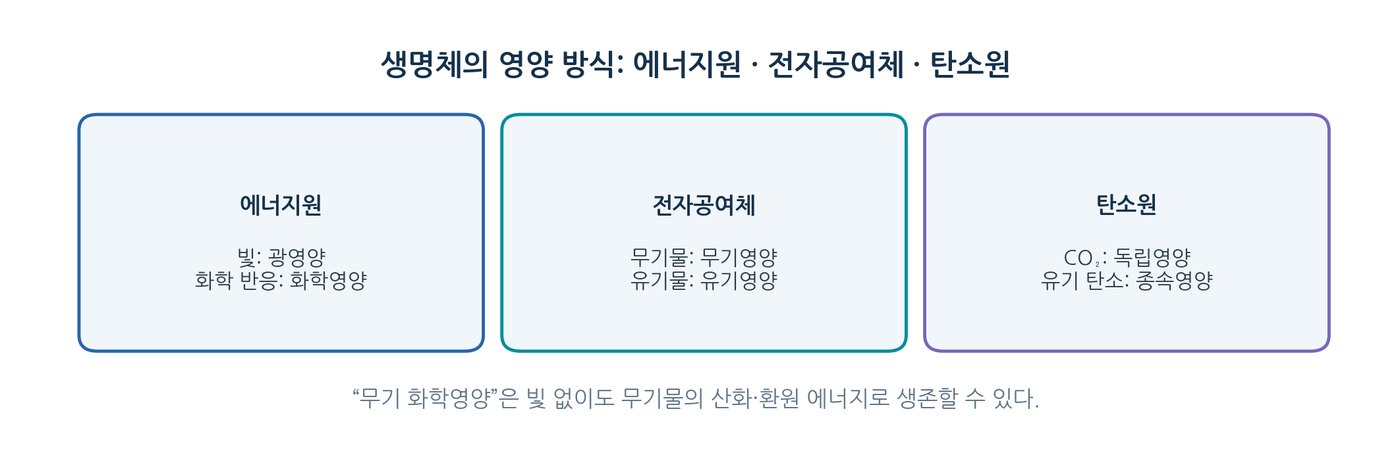
  • Phototrophy — photons raise electrons to higher energy states and drive energy-conserving reactions
  • Chemotrophy — free energy released by oxidation–reduction reactions drives ATP synthesis
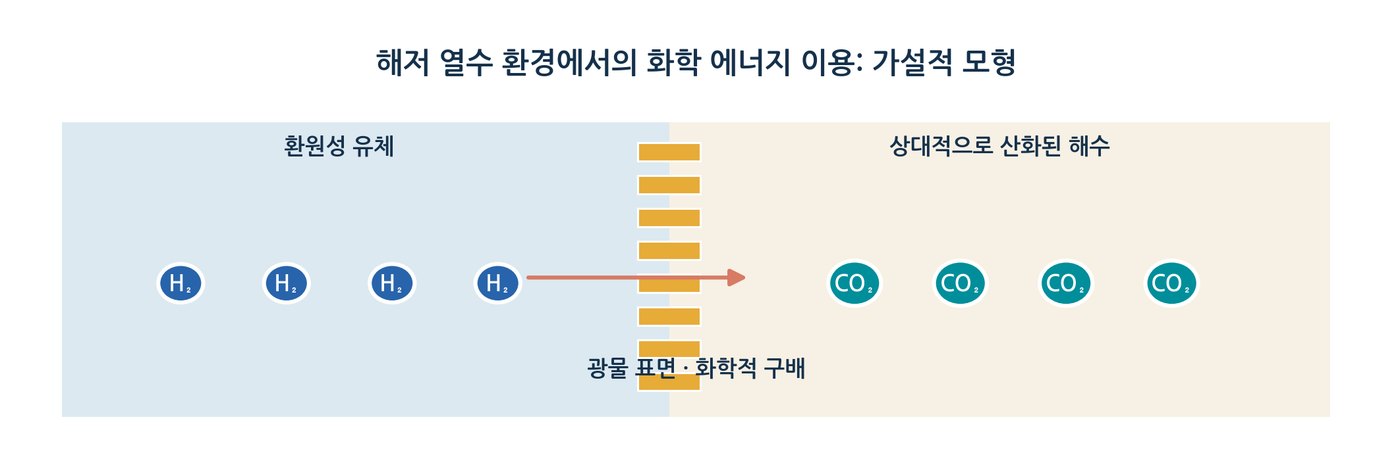
  • Chemolithotrophs — use inorganic electron donors such as H₂, H₂S, Fe²⁺ and NH₃
  • Methanogenesis — 4H₂ + CO₂ → CH₄ + 2H₂O in specific archaeal lineages, not all archaea
  • Hydrothermal systems — supply mineral catalysts, reducing species, pH and temperature gradients
  • Chemiosmosis — proton-motive force combining membrane potential and pH gradient is used by many organisms today, suggesting an ancient origin
  • What is claim vs evidence — "used inorganic fuels" is a well-supported inference, not a demonstrated reconstruction of the first cell
4H₂ + CO₂ → CH₄ + 2H₂O
06

Eukaryotic cells evolved from simpler precursors in several stages

An archaeal host plus a bacterial symbiont explains the chimeric eukaryotic cell.

  • Host lineage — eukaryotes are phylogenetically nested within Archaea, close to the Asgard lineages
  • Mitochondria — derived from an alphaproteobacterium taken up as a symbiont
  • Evidence — own genomes, division by fission, bacterial-type ribosomes and genes, phylogenetic signals in organellar proteins
  • Gene transfer — many organellar proteins are now encoded in the nucleus, synthesised in the cytoplasm and imported
  • Chloroplasts — primary endosymbiosis with a cyanobacterium; secondary symbiosis occurred in some lineages
  • Still debated — the timing of the nuclear envelope, cytoskeleton and endomembrane system, and the exact order of mitochondrial acquisition
07

Molecular anatomy reveals evolutionary relationships

Sequence similarity suggests homology; a phylogenetic tree is a statistical hypothesis, not a fact.

  • Shared molecules — DNA, RNA, proteins and ribosomes in all cellular organisms; conserved codon decoding and translation machinery
  • Homology — relationship by common ancestry; "90 % homology" is imprecise because identity is the measurable quantity
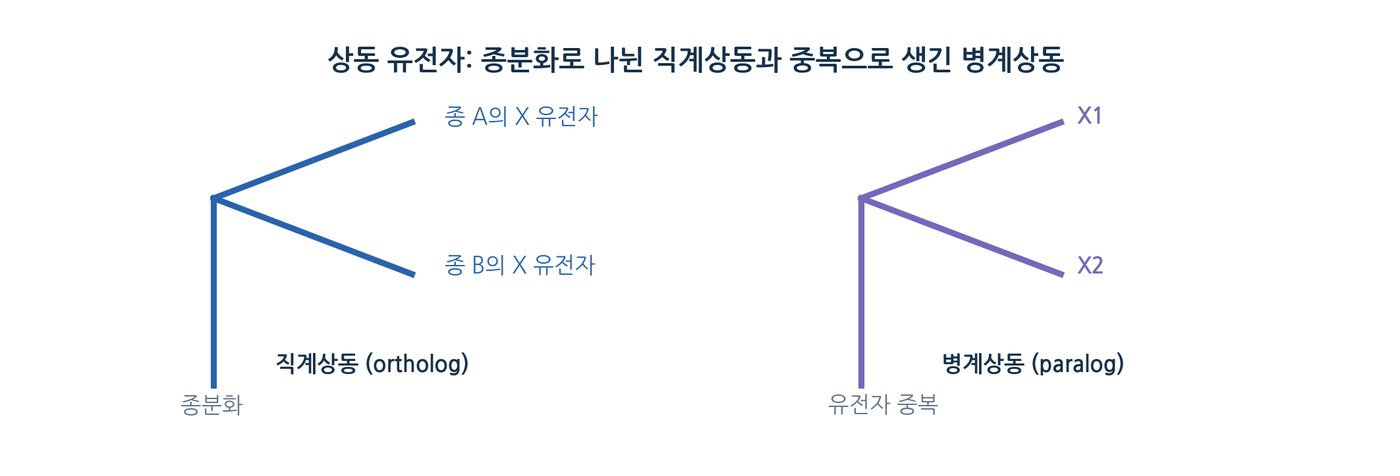
  • Orthologs and paralogs — separated by speciation versus gene duplication
  • Alignment — matches corresponding positions; raw mismatch counts ignore repeated substitutions, indels and rate variation
  • Example — in four hypothetical 12-base sequences, A–B differ at 1 position, A–C at 3, A–D at 6
  • Limits — this alone cannot establish a species tree; more sequences and an explicit model are required
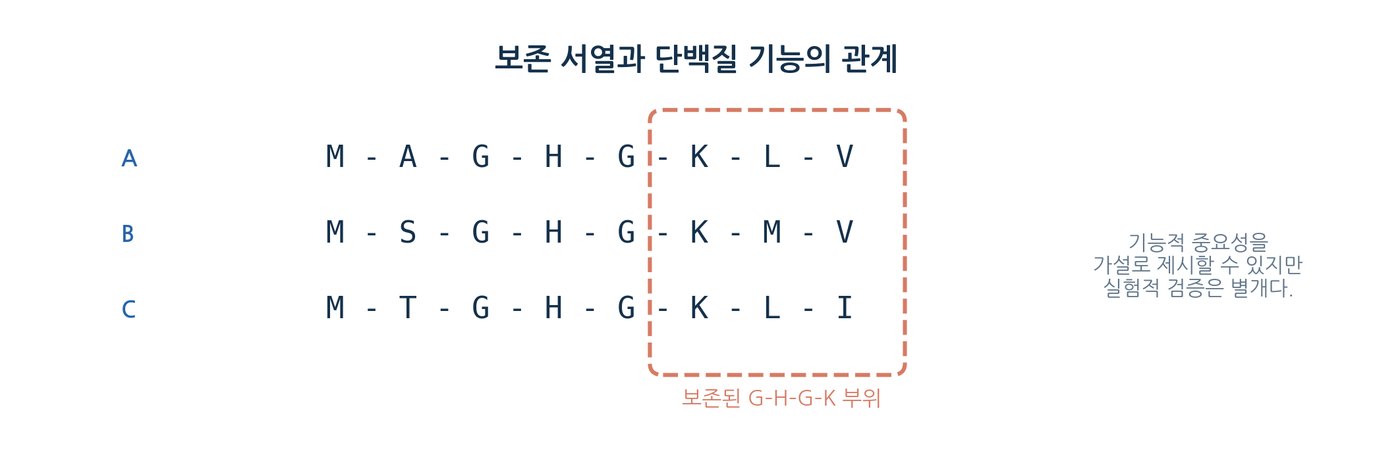
  • Conserved domains — active sites, ATP-binding motifs and folding cores suggest function, but activity assays and genetic tests are still required
08

Functional genomics links genes to cellular activity

Knowing the sequence is not knowing the function; expression data suggest candidates, perturbation tests establish causation.

  • Genomics vs functional genomics — the first catalogues DNA, the second tests how that information is used
  • Methods — RNA-seq for transcript abundance, proteomics for protein amount and modification, gene perturbation for causality
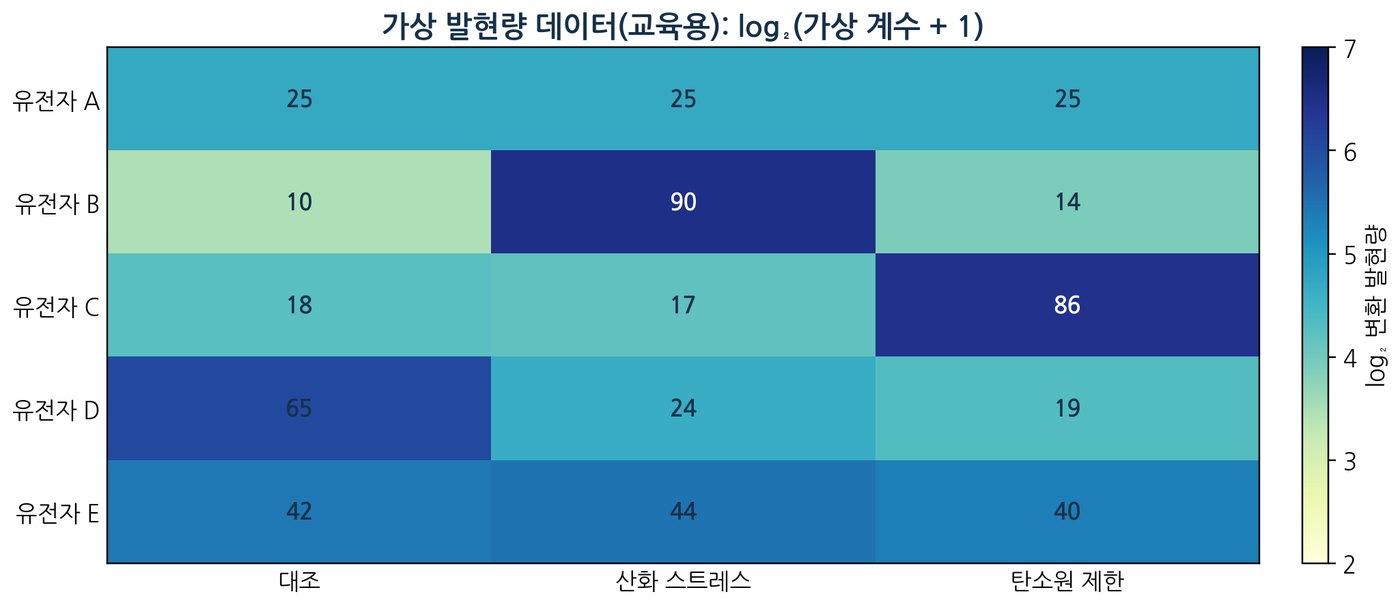
  • Expression ≠ activity — translation rate, degradation, post-translational modification, localisation and substrate supply all intervene
  • Correlation ≠ causation — controls, biological replicates and independent validation are required
  • Perturbation — knock out the candidate gene, compare phenotypes, then rescue by reintroducing the gene
09

Genome comparison is increasingly important in human biology and medicine

A variant is not a cause; pathogenicity needs several independent lines of evidence.

  • Cross-species comparison — identifies conserved genes, lineage-specific duplications and losses, and regulatory regions
  • Model organisms — orthologs suggest initial hypotheses about human gene function
  • Most variants are benign — pathogenicity requires population frequency, segregation in families, functional assays, clinical phenotype and replication
  • Conserved residue changes — a clue to functional importance, not proof of disease causation
  • Applications — antimicrobial resistance tracking, tumour genome analysis, rare disease variant interpretation
  • Interpretation — sequence, expression, protein function, environment and clinical data must be read together
▦

Reference tables

Data tables for this section, shown on click and printed in the appendix.

참조 자료
본문의 참조 표시를 누르면 이 창에서 원문 그림·표를 크게 볼 수 있습니다.