01
Biomolecules are carbon compounds carrying functional groups
- Four covalent bonds — carbon forms chain, branched and ring skeletons; single and double bonds create further variety
- Rotation — C–C single bonds rotate; double bonds are restricted by the π bond, shaping flexibility, planarity and accessibility
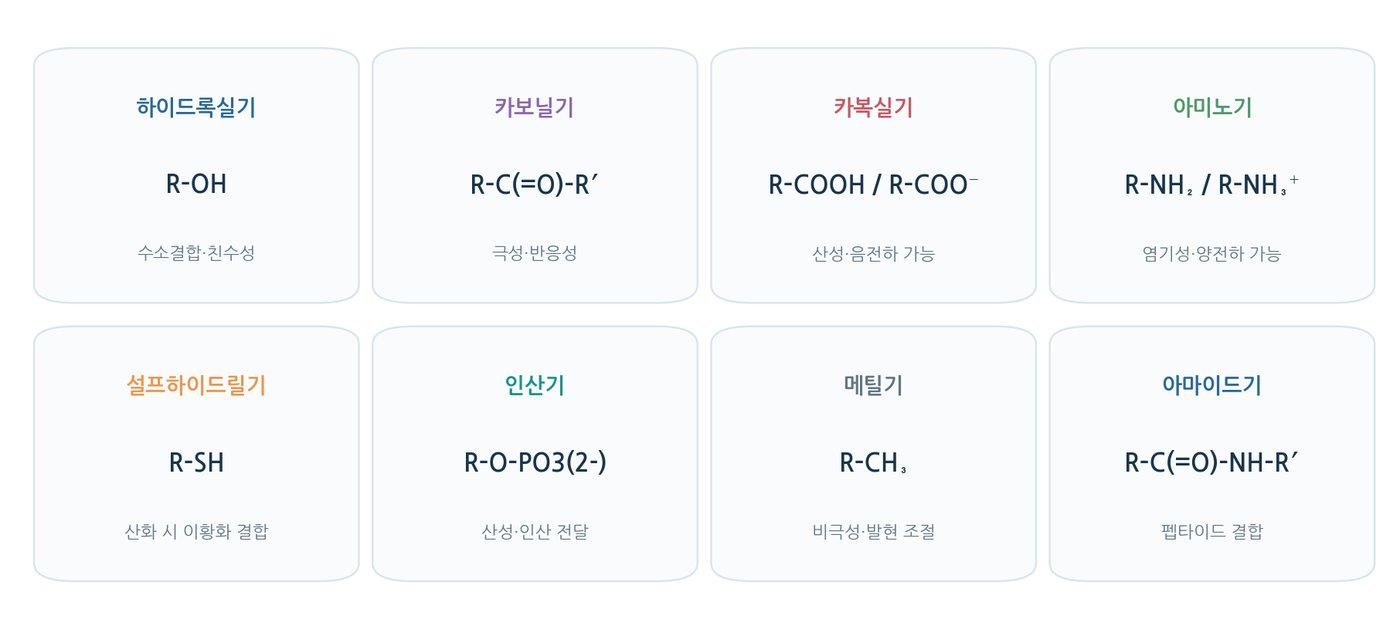
- Functional groups — hydroxyl, carbonyl, carboxyl, amino, sulfhydryl, phosphate, methyl and amide groups set polarity, charge and reactivity
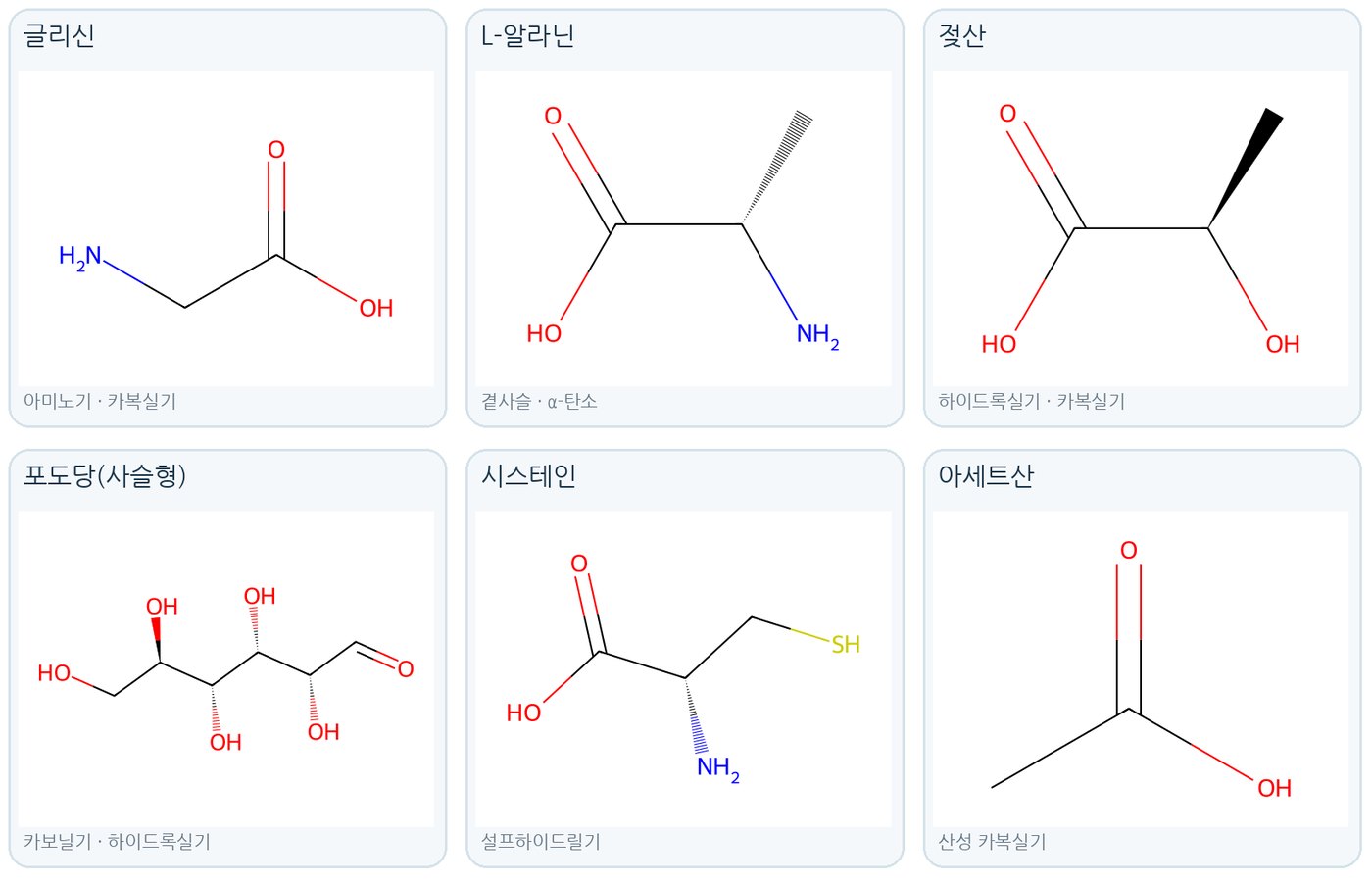
- Several groups at once — glycine carries amino and carboxyl; glucose carries hydroxyls and a carbonyl and is mainly cyclic in solution
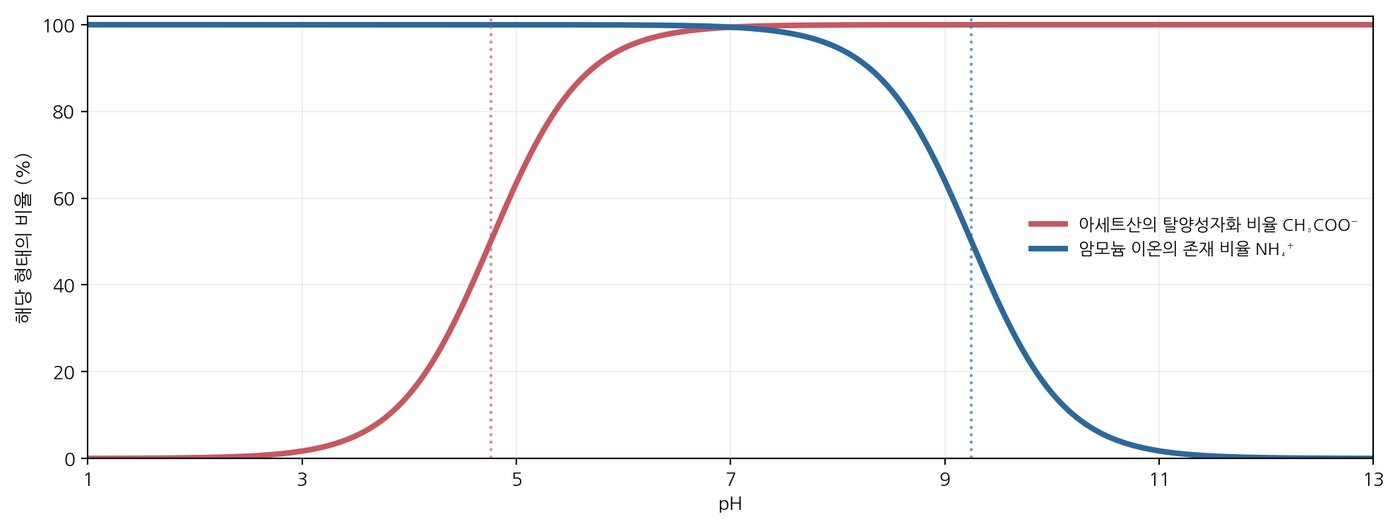
- Zwitterions — in biological solutions amino acids usually carry both NH₃⁺ and COO⁻
- pH dependence — above its pKa a carboxyl group is deprotonated; an amino group loses its proton as pH rises
pH = pKa + log([A⁻]/[HA])
02
Cells contain a common set of small molecules
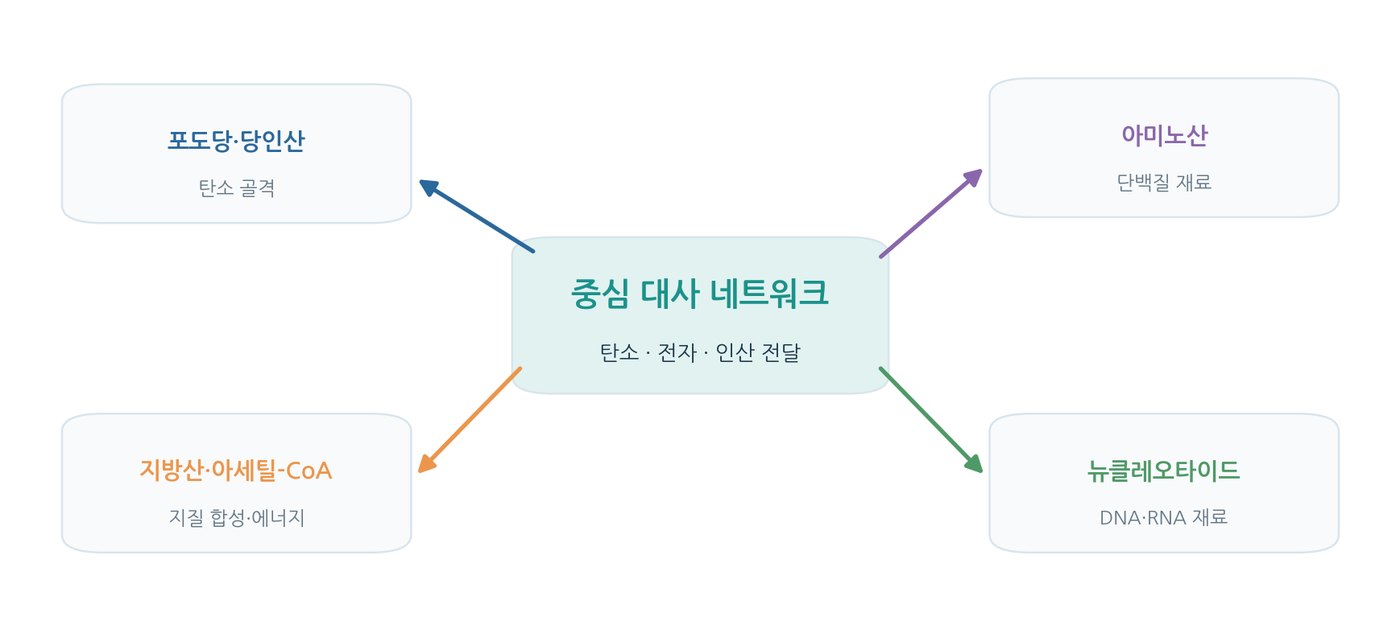
- Monosaccharides and sugar phosphates — carbon and energy supply, nucleic acid precursors
- Amino acids — protein synthesis and nitrogen metabolism
- Nucleotides — nucleic acid synthesis, phosphate transfer, signalling
- Organic acids and intermediates — linking carbon skeletons between pathways
- Fatty acids and lipid precursors — membrane and storage lipids
- Cofactors and coenzymes — NAD⁺/NADH, FAD, coenzyme A carrying electrons and groups
- Inorganic ions — Mg²⁺, K⁺, Ca²⁺, Fe²⁺/Fe³⁺ for charge balance, catalysis, signalling and electron transfer
03
[Separate note] Molecular mass and its units
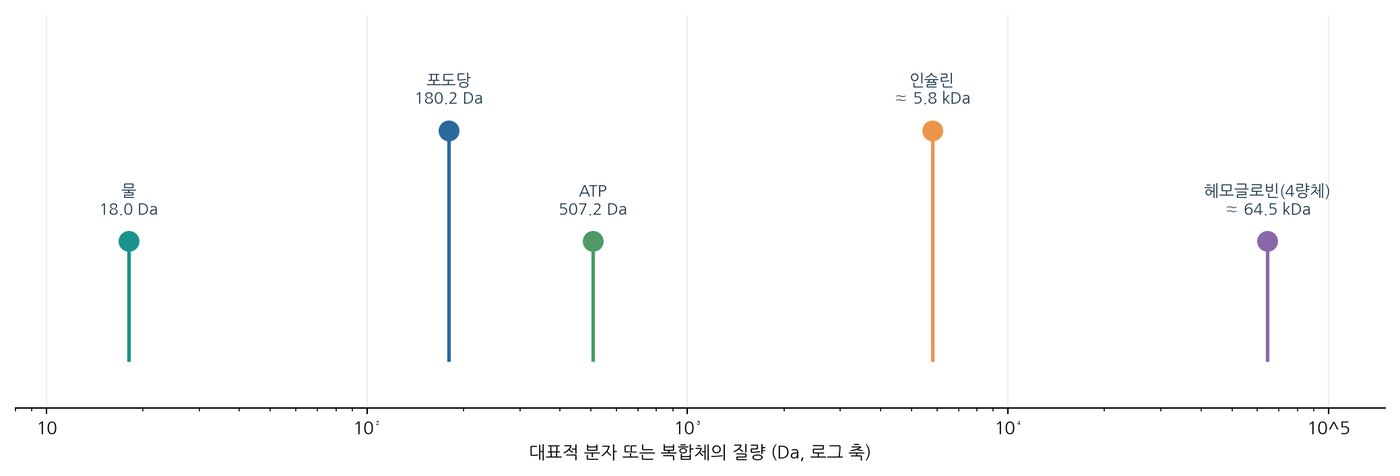
- Molecular mass — the mass of one molecule, in kg or Da
- Relative molecular mass (Mr) — the ratio to the atomic mass unit; dimensionless
- Molar mass — mass divided by amount of substance, g/mol
- Dalton — 1 Da = 1 u = 1/12 the mass of a ¹²C atom
- Example A — glucose C₆H₁₂O₆ gives Mr = 180.156, so one molecule ≈ 180.156 Da and one mole ≈ 180.156 g
- Example B — a 50 kDa protein has a molar mass of 50,000 g/mol; 0.10 μmol weighs 5.0 mg
- Example C — Gly-Gly: 2 × 75.07 − 18.015 = 132.125 g/mol; n residues form n−1 bonds
Mr(C₆H₁₂O₆) = 6(12.01) + 12(1.008) + 6(16.00) = 180.156
04
Macromolecules are the main components of cells
- Proteins — amino acids joined by peptide (amide) bonds; N-terminal to C-terminal sequence
- Polysaccharides — monosaccharides joined by glycosidic bonds; α/β linkage and branching change the material
- Nucleic acids — nucleotides joined by 3′–5′ phosphodiester bonds with 5′→3′ directionality
- Lipids — phospholipids, triglycerides and steroids differ too much for one repeating monomer
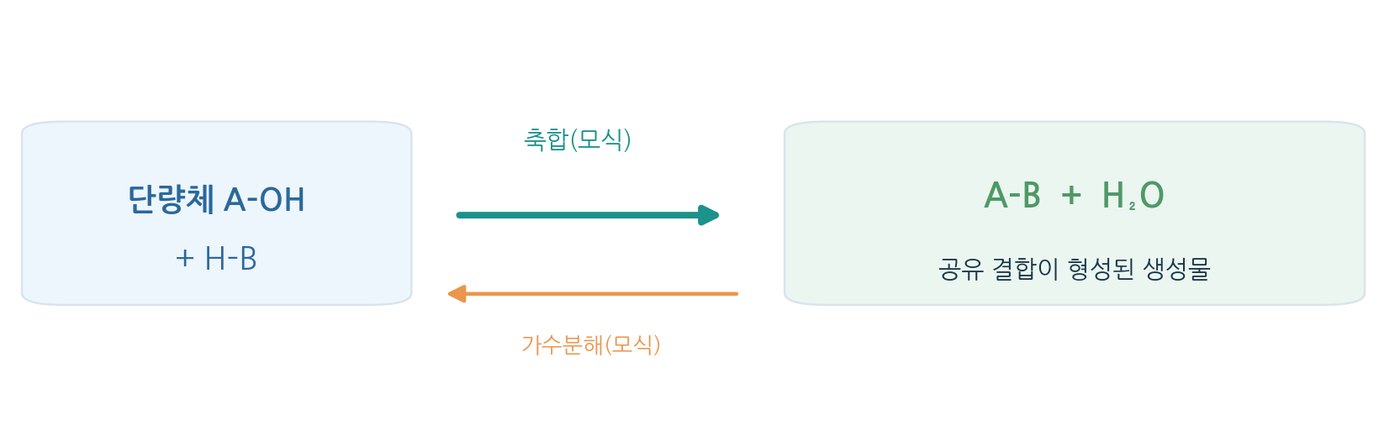
- Condensation and hydrolysis — the overall stoichiometry; real synthesis needs activated precursors, tRNA and ribosomes
- Beyond the sum of parts — sequence constrains folding, base complementarity stores information, branching separates starch, glycogen and cellulose
- Levels of protein structure — primary, secondary, tertiary and quaternary; flexible and disordered regions exist
05
Three-dimensional structure: configuration and conformation
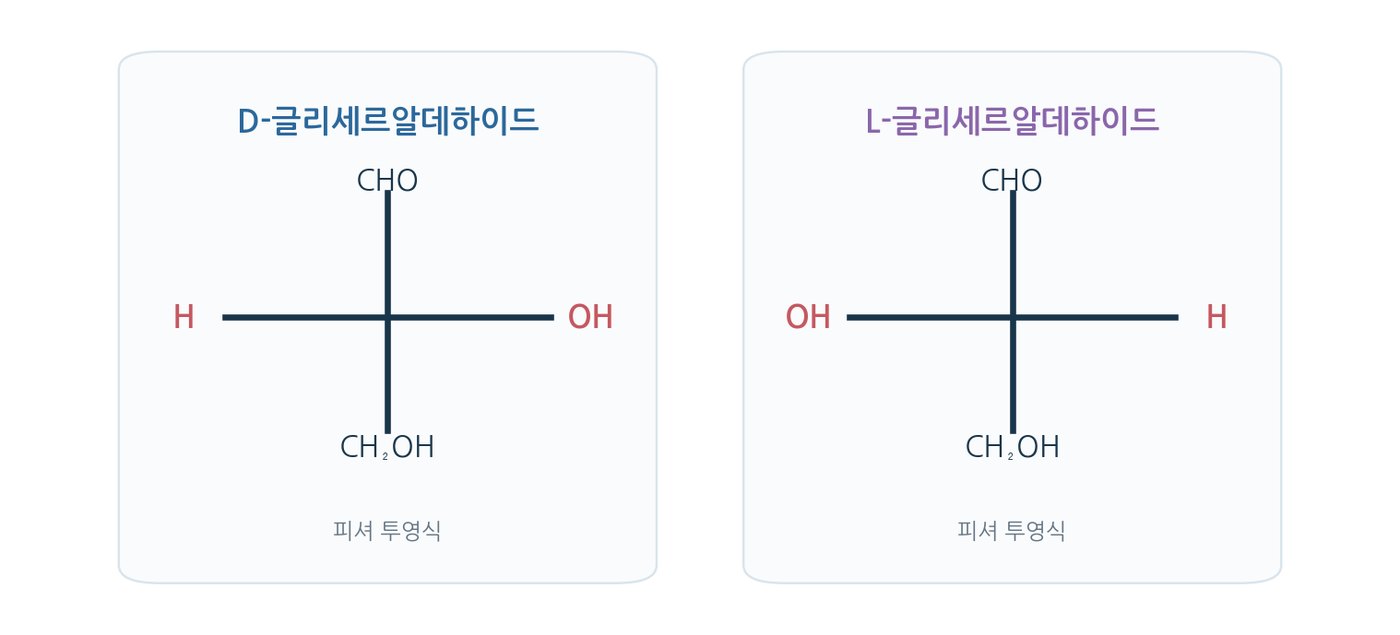
- Configuration — spatial difference not removed by rotation about a single bond: enantiomers, E/Z isomers
- Conformation — arrangement changed by rotation about single bonds or by folding
- Chirality — not superimposable on its mirror image; a carbon with four different substituents is a chiral centre, but not every chiral molecule has one
- Enantiomers — identical in achiral environments, opposite in optical rotation and different in chiral recognition
- D/L, R/S, (+)/(−) — relative configuration, absolute configuration by CIP priority, and observed rotation are three different systems
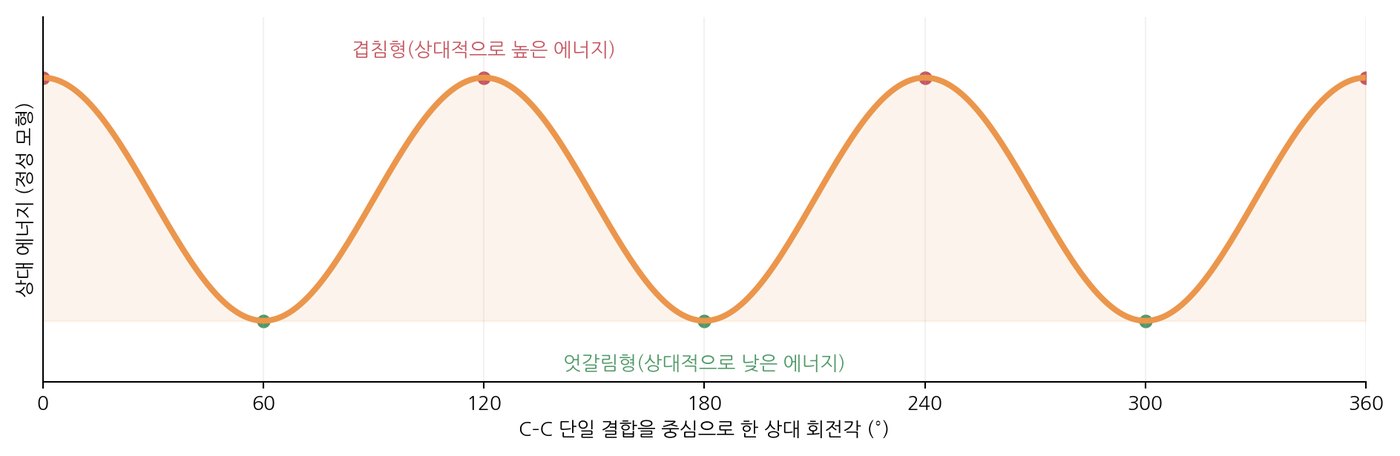
- Conformational energy — eclipsed and staggered arrangements differ; rotation is possible but not free of energy cost
ΔG for rotation: staggered is favoured over eclipsed
06
[Separate note] Pasteur and optical activity
- Observation — tartrate crystals of identical composition differed in optical activity
- Classification — two mirror-image crystal forms were identified in paratartrate samples
- Separation and measurement — individual crystals were picked apart and each solution rotated polarised light in the opposite direction
- Interpretation — equal amounts of both enantiomers cancel, leaving no apparent activity
- Measurement — α = [α]λ,T · l · c; sucrose [α]D,20 ≈ +66.5°·mL·g⁻¹·dm⁻¹, so 10 % (w/v) in a 10 cm cell gives about +6.65°
- Legacy — the basis of enzyme stereospecificity, biomolecular chirality and enantiomeric drugs
- Caution — zero rotation does not prove achirality: a racemic mixture also reads zero
α = [α]λ,T · l · c
07
Reactions between biomolecules can be stereospecific
- Chiral active site — proteins built from L-amino acids create a chiral pocket, so enantiomers make different contacts
- Stereospecific — a difference in substrate configuration leads to a different outcome or pathway
- Stereoselective — one of several possible stereoisomeric products predominates
- Beyond lock and key — induced fit and selection among pre-existing conformations; substrate orientation changes the activation barrier
- Chiral choices of life — proteins use L-α-amino acids, nucleic acids use D-sugars, yet D-amino acids occur in some bacterial cell walls
08
Key concepts
- Carbon and functional groups — the skeleton sets shape; the groups set reactivity, charge and solubility
- Groups and pH — protonation follows pKa and the surrounding environment
- Small molecules — sugars, amino acids, nucleotides and cofactors feed connected reactions
- Mass units — Da, g/mol and a dimensionless Mr are not interchangeable
- Macromolecule classes — proteins, polysaccharides and nucleic acids are polymers; lipids are not uniformly so
- Configuration and conformation — two different descriptions of spatial structure
- Chirality — recognition differs in chiral environments
References
| Functional group | Typical molecules and positions | Biochemical significance |
|---|---|---|
| Hydroxyl (–OH) | Sugars, glycerol, serine | Increases polarity and hydrogen bonding |
| Carbonyl (>C=O) | Aldehyde and ketone forms of sugars | Can be a target of nucleophilic attack |
| Carboxyl (–COOH / –COO⁻) | Fatty acids, amino acids | Involved in acid–base reactions, charge and ionic bonding |
| Amino (–NH₂ / –NH₃⁺) | Amino acids, many metabolites | Proton acceptance and electrostatic attraction |
| Sulfhydryl (–SH) | Cysteine, coenzyme A | Important in redox reactions and disulfide bonds |
| Phosphate (phosphate ester etc.) | ATP, nucleic acids, sugar phosphates | Phosphate transfer, negative charge, enzyme recognition |
| Methyl (–CH₃) | Fatty acids, DNA methylation sites | Hydrophobicity and some recognition and regulation |
| Amide (–CONH–) | Peptide bonds in proteins | Bond character from resonance and hydrogen bonding |
| Class | Examples | Main functions |
|---|---|---|
| Monosaccharides and sugar phosphates | Glucose, ribose, glucose 6-phosphate | Carbon supply, energy metabolism, nucleic acid components |
| Amino acids | Glycine, alanine, glutamate | Protein synthesis and nitrogen metabolism |
| Nucleotides | ATP, GTP, CTP, UTP, dATP | Nucleic acid synthesis, phosphate transfer, signalling |
| Organic acids and intermediates | Pyruvate, lactate, citrate | Link carbon skeletons between pathways |
| Fatty acids and lipid precursors | Palmitate, glycerol 3-phosphate | Formation of membrane and storage lipids |
| Cofactors and coenzymes | NAD⁺/NADH, FAD, coenzyme A | Electron and group carriers; assistance of enzyme reactions |
| Inorganic ions | Mg²⁺, K⁺, Ca²⁺, Fe²⁺/Fe³⁺ | Charge balance, catalysis, signalling, electron transfer |
| Term | Definition | Unit and example |
|---|---|---|
| Molecular mass | Mass of one molecule | kg or Da; water ≈ 18.015 Da |
| Relative molecular mass (Mr) | Mass of one molecule divided by the atomic mass unit u | Dimensionless; Mr of water ≈ 18.015 |
| Molar mass (M) | Mass divided by amount of substance | g/mol or kg/mol; water ≈ 18.015 g/mol |
| Dalton (Da) | 1 Da = 1 u = 1/12 the mass of a ¹²C atom | 1 Da ≈ 1.66054×10⁻²⁷ kg |
| Molecular weight | Customary term used for relative molecular mass and others | Meaning varies with context; a precise name is preferred |
| Class | Building unit | Typical linkage | Structural features |
|---|---|---|---|
| Proteins | Amino acids | Peptide (amide) bond | N-terminal to C-terminal sequence; diverse side chains |
| Polysaccharides | Monosaccharides | Glycosidic bond | Properties change with α/β linkage and branching |
| DNA and RNA | Nucleotides | 3′–5′ phosphodiester bond | 5′→3′ directionality; sequence stores information |
| Lipids | Fatty acids, glycerol, phosphate (varies) | Ester, amide and others (varies) | Hydrophobic or amphipathic; bilayers or storage |